
 Mon–Fri: 10:00 – 18:00
  Request a call


Favicon Generator: 10 PNG Sizes Plus Web Manifest
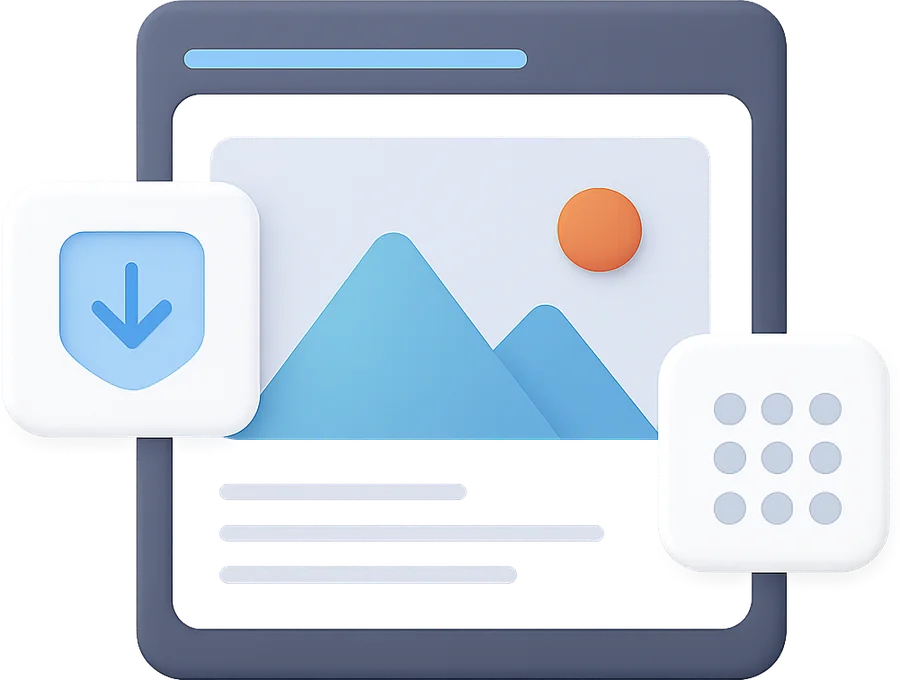
A complete favicon set for a modern site includes 8-10 sizes: 16x16 (browser tab), 32x32 (search results), 96x96 (Chrome shortcuts), 180x180 (iOS home screen), 192x192 + 512x512 (Android PWA). This tool resizes your source image to all required sizes in your browser, generates a manifest.json, and outputs the HTML head tags. No upload — everything runs in your browser.
How it works
Minimum: favicon.ico (32x32, multi-resolution), apple-touch-icon.png (180x180), and a 192x192 + 512x512 in manifest.json for PWA install. Modern best practice adds favicon-16.png, favicon-32.png, and favicon-96.png explicitly to give browsers precise control.
Most common cause: source image is too small. A 32x32 source upscaled to 192x192 looks blurry. Start with 512x512 source minimum. Second cause: complex logos that don't scale to 16x16 — simplify the mark for tiny sizes (just initials or icon, no text).
Yes, alongside PNG fallbacks. SVG favicons () work in modern browsers and scale perfectly at any size. Always provide PNG fallbacks for older browsers and OS chrome that can't render SVG (iOS home screen, etc.).
Yes — Google shows your favicon next to the page title in SERP listings (since 2020 on mobile, 2022 on desktop). A clear, branded favicon improves click-through rate. Google requires favicon to be at least 8×8 pixels and a multiple of 48 (so 48x48, 96x96, 144x144 are all valid). Reference via in HTML.
 Download brief
  Print brief
Choose the most convenient way to contact us:
See what is holding your own page back
Paste a URL and get about twenty checks on the live page — indexing, meta, headings, markup, speed. Every finding on screen, the fixes by email.
Get a free UX review
Our senior designers review your site's UX, visual hierarchy, accessibility, and conversion flow — and send you a prioritised list of quick wins.