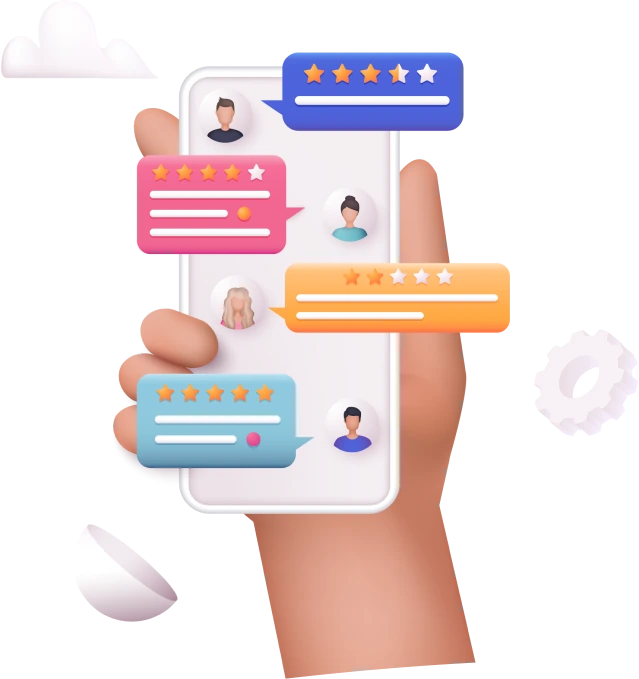
Custom client portals, partner portals and employee self-service systems for B2B companies | Modern stack, role-based access, integrations with your CRM and ERP
Web Portal Development for Self-Service B2B and Internal Teams
Web Portal Development from Global One Digital builds custom client portals, partner portals, employee self-service systems and B2B marketplaces for companies across the USA, EU and CIS. We deliver portals that integrate deeply with your CRM, ERP and identity stack rather than living as isolated apps that nobody updates after launch.
Types of web portal development we ship
Client portals: project status, document sharing, billing and support history accessible to your customers. Partner portals: deal registration, marketing assets, training and certification, commission tracking for resellers and affiliates. Employee self-service portals: PTO requests, expense reporting, internal directory, document approvals, knowledge base. B2B marketplaces: catalogues, custom pricing, quote workflows, account-level permissions.
What is typically included
Discovery and information architecture, role-based access control with proper permission modeling, integration with your CRM (Salesforce, HubSpot, Dynamics) and ERP (NetSuite, SAP, Microsoft Dynamics), single sign-on (SSO) via SAML, OAuth or OIDC, customer-facing UI built on React or Vue, admin interfaces for your internal team, audit logging for compliance, plus security hardening from the start.
Stack we work with for portals
Frontend on Next.js or Nuxt for performance and good developer experience. Backend on Node, Laravel or Django depending on your existing team. Authentication via Auth0, Cognito or Clerk for production-grade SSO without rolling your own. Database choices follow your data shape — PostgreSQL for most cases, plus Redis for sessions and caching. Hosting on Vercel, AWS, GCP or your existing infrastructure.
Where portal projects typically struggle and how we avoid that
Most portal projects fail because they are built as standalone systems that duplicate data the company already has elsewhere. Our portal development engagements start with mapping where data lives (CRM, ERP, helpdesk, billing) and integrating reads and writes through proper APIs rather than syncing copies. Single source of truth, consistent updates, no the portal says X but the CRM says Y problems.
Security and compliance
Portals often hold sensitive customer or employee data — security and compliance are baseline. We build with SSO and MFA support, encrypted data at rest and in transit, audit logging, role-based permissions enforced at the API layer, and regular security audits. SOC 2, GDPR and HIPAA compliance handled where in-scope, working with your existing compliance team.
No juniors learning on your project. Every engagement is led by people who have shipped 30+ similar projects.
Transparent process and reporting
Weekly updates, monthly reviews, clear scope. You always know what is being done and why.
B2B and SaaS focus
We work with growing businesses — not enterprise bureaucracy, not consumer apps. Our process fits your scale.
USA, EU and CIS markets
Time zones overlap with US East and Central Europe. We deliver in English and Russian.
Modern stack, no legacy traps
React, Next.js, Laravel, Node, Python and modern WordPress. No vendor lock-in, no proprietary framework dead-ends.
Long-term partnership, not project flings
Most clients work with us for 2+ years. We document everything, hand off cleanly and stay reachable for what comes next.
Who we build for
B2B SaaS founders
Growing B2B teams
DTC and ecommerce operators
Russian-speaking entrepreneurs
How we build websites and web apps
1
Discovery call
2
Audit and proposal
3
Build / implementation
4
Launch and handover
5
Ongoing optimization
Frequently asked questions
-
How long does a typical project take?
A landing site: 4-6 weeks. A mid-size web app or ecommerce platform: 8-12 weeks. Complex multi-language platforms: 16+ weeks. Discovery call narrows it down for your specific scope.
+
What technology stack do you use?
For frontend: React, Next.js, Vue, Nuxt. For backend: Node, Laravel, Python, PHP. For CMS: WordPress (mature) and Strapi (headless). We pick the stack that fits your project, not the other way round.
+
Will you work with our existing developers?
Yes. We frequently embed into existing engineering teams, work in your repository, follow your code review process and hand off cleanly when our work is done.
+
Do you provide design or just development?
Both. We have senior designers who specialise in B2B and SaaS. If you already have design (Figma, Sketch), we work directly from your files.
+
What does post-launch support look like?
Every project includes a bug-fix window (1-3 months depending on tier). After that we offer maintenance retainers from $400/mo. Most clients stay on a retainer for ongoing iteration.
+
Can you migrate our existing site to a new platform?
Yes. Migrations are a regular part of our work — WordPress to headless, Wix to Shopify, custom CMS to modern stack. We preserve content, redirects and SEO equity.

 Mon–Fri: 10:00 – 18:00
  Request a call


 Download brief
  Print brief