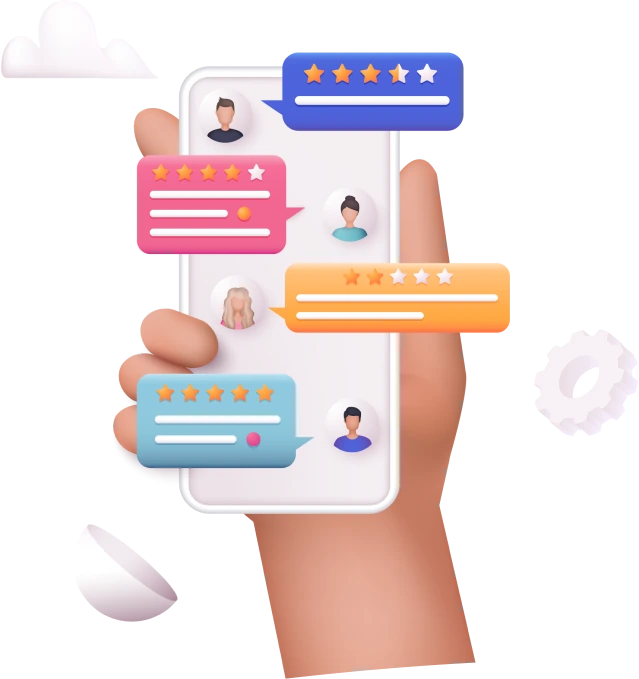
Heatmap analysis, user testing, conversion-focused design changes, A/B test infrastructure for B2B and SaaS sites. Iterative improvements based on real user behaviour.
UX Improvements That Lift Conversion Without a Full Redesign
UX Improvements from Global One Digital are surgical changes to your existing site or app that increase conversion, reduce drop-off and clarify intent — without the cost and risk of a full redesign. Our team has shipped UX work for B2B SaaS, ecommerce and service businesses across the USA and EU, with measurable results from data, not hunches.
What this covers
We focus on the screens and flows where users actually make decisions: pricing pages, sign-up flows, checkout, forms, dashboards. We use heatmaps, session recordings, funnel data and lightweight usability testing to identify friction, then ship specific fixes — clearer copy, simpler form fields, better error states, less cognitive load on key pages. Each change is small enough to roll back if data does not support it.
How we identify what to fix
Quantitative first: we look at funnel drop-off, scroll depth, click maps, form abandonment data. Qualitative second: short usability tests with real users, plus support-team feedback about repeated user complaints. The combination tells us not just what is broken but why people are leaving. We then size each potential improvement by likely impact and shipping effort.
Who this is designed for
Companies whose conversion has stalled despite traffic growth. Teams that have outgrown their MVP design but cannot afford to pause for a full rebuild. Product owners who keep getting the same support questions and suspect the UI is the cause. Ecommerce operators losing checkout completions on mobile. Anyone who has been told their site needs work but does not know where to start for the best ROI.
Stack and tooling
Hotjar or Microsoft Clarity for heatmaps and recordings. Google Analytics 4 plus Mixpanel or Amplitude for funnel analysis. Maze or UserTesting for remote usability sessions. Figma for proposed designs, Storybook for component-level changes. We work directly with your development team or our own to ship each iteration — typically one to three improvements per sprint, measured against a baseline.
How an engagement runs
Week one: tooling audit, data review, stakeholder interviews. Week two: usability testing on key flows, friction list compiled and prioritised. Weeks three onwards: design and shipping cycles, two-week sprints, each change measured for at least two weeks before declaring win or rollback. Engagement length scales with how many flows need improving — typically eight to sixteen weeks for meaningful lift.
No juniors learning on your project. Every engagement is led by people who have shipped 30+ similar projects.
Transparent process and reporting
Weekly updates, monthly reviews, clear scope. You always know what is being done and why.
B2B and SaaS focus
We work with growing businesses — not enterprise bureaucracy, not consumer apps. Our process fits your scale.
USA, EU and CIS markets
Time zones overlap with US East and Central Europe. We deliver in English and Russian.
Modern stack, no legacy traps
React, Next.js, Laravel, Node, Python and modern WordPress. No vendor lock-in, no proprietary framework dead-ends.
Long-term partnership, not project flings
Most clients work with us for 2+ years. We document everything, hand off cleanly and stay reachable for what comes next.
Who we build for
B2B SaaS founders
Growing B2B teams
DTC and ecommerce operators
Russian-speaking entrepreneurs
How we build websites and web apps
1
Discovery call
2
Audit and proposal
3
Build / implementation
4
Launch and handover
5
Ongoing optimization
Frequently asked questions
-
How long does a typical project take?
A landing site: 4-6 weeks. A mid-size web app or ecommerce platform: 8-12 weeks. Complex multi-language platforms: 16+ weeks. Discovery call narrows it down for your specific scope.
+
What technology stack do you use?
For frontend: React, Next.js, Vue, Nuxt. For backend: Node, Laravel, Python, PHP. For CMS: WordPress (mature) and Strapi (headless). We pick the stack that fits your project, not the other way round.
+
Will you work with our existing developers?
Yes. We frequently embed into existing engineering teams, work in your repository, follow your code review process and hand off cleanly when our work is done.
+
Do you provide design or just development?
Both. We have senior designers who specialise in B2B and SaaS. If you already have design (Figma, Sketch), we work directly from your files.
+
What does post-launch support look like?
Every project includes a bug-fix window (1-3 months depending on tier). After that we offer maintenance retainers from $400/mo. Most clients stay on a retainer for ongoing iteration.
+
Can you migrate our existing site to a new platform?
Yes. Migrations are a regular part of our work — WordPress to headless, Wix to Shopify, custom CMS to modern stack. We preserve content, redirects and SEO equity.

 Mon–Fri: 10:00 – 18:00
  Request a call



 Download brief
  Print brief